Humans have an impressive track record of confidently believing the wrong thing.
We once thought the earth was flat. Certain that lightning never strikes the same place twice. Adamant that we only use ten percent of our brains. Each of these beliefs was backed by the logic of the day, until the evidence accumulated and the narrative changed with a gradual, collective “oh”. We might be approaching one of those moments with plastic packaging.
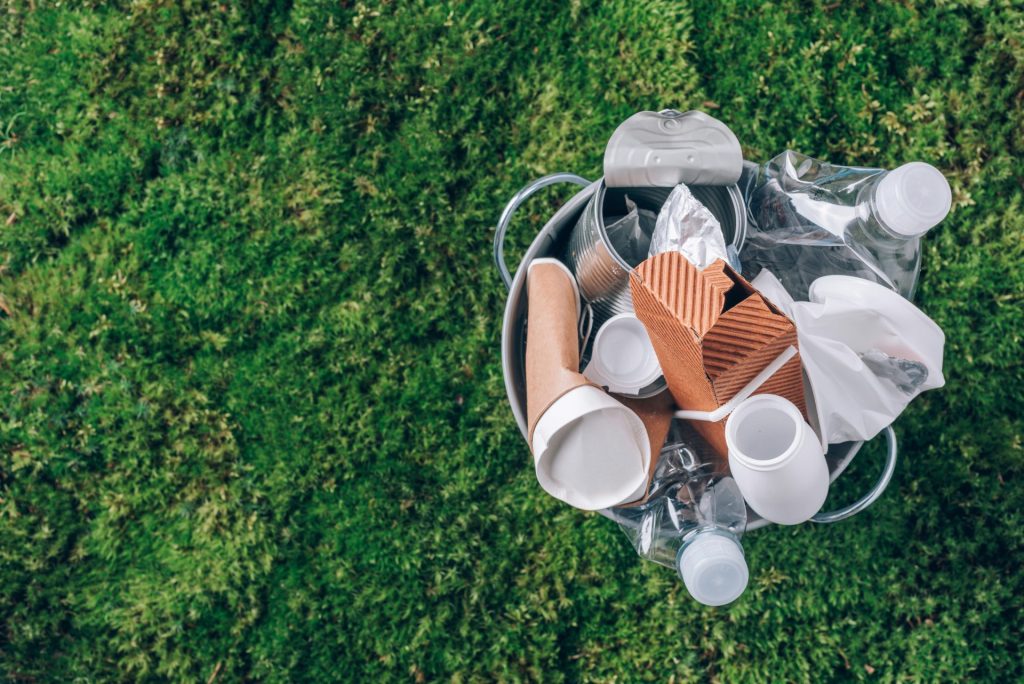
The idea that plastic is the enemy has become so embedded in consumer consciousness that plastic-free has become a synonym for sustainable. It’s clean, it’s simple, it gives people something to point at. But the more you examine the full picture, the more that framing starts to unravel, and the real question isn’t what material is in the pack, but how well the pack actually performs its job.
The metric we’ve been optimising for
Across the industry, and in the minds of consumers, plastic use has become the headline KPI for packaging sustainability. Brands announce plastic reduction targets, retailers make pledges and shoppers choose accordingly. And on the surface, all of this makes a certain kind of sense, because visible plastic waste in the environment is a genuine problem.
But total plastic use is a proxy metric. What we actually care about, and what we should be measuring, is total environmental impact. When you start examining the full picture, the calculation gets considerably more complicated.
Consider food waste. Roughly a third of all food produced globally never gets eaten. The emissions generated by that wasted food eclipse those of the packaging designed to protect it. Think about strawberries that rot before they reach the consumer, or fish that degrades three days before its potential shelf life. These aren’t packaging problems, they’re performance failures that carry a carbon cost that no amount of material-switching can offset.
When the solution becomes the problem
There’s a version of sustainability that looks great in a corporate press release but falls apart in the supply chain. Strip out a barrier coating to hit a recyclability target and shelf life suffers. Switch materials without understanding the full thermal or moisture demands of the application, and product integrity goes with it. Choose a format based on how it reads on a sustainability checklist rather than how it performs across the cold chain, and you’ve optimised for the wrong thing entirely.
The problem isn’t ambition; it’s the assumption that swapping materials is inherently progress. A pack that fails to protect its contents, arrives compromised, spoils product early, or frustrates the consumer enough that they abandon it has failed at the most fundamental level. It has not prevented waste. It has created it.
This is where genuine material expertise makes the difference. Understanding the full life cycle of a pack, how it performs on the filling line, how it behaves through the supply chain, how the consumer interacts with it, and what happens to it after use, is what separates a well-designed sustainable pack from one that simply looks the part. That knowledge sits in the team at Parkside, that know how to engineer packaging properly.
Barrier performance isn’t a detail, it’s the whole point
This is where barrier technology becomes central to the conversation, rather than a technical footnote. Oxygen transmission, moisture vapour and grease resistance are properties that teams at Parkside obsess over. They are the difference between a product that reaches its potential shelf life intact and one that doesn’t. They are, in the most literal sense, the difference between food eaten and food wasted.
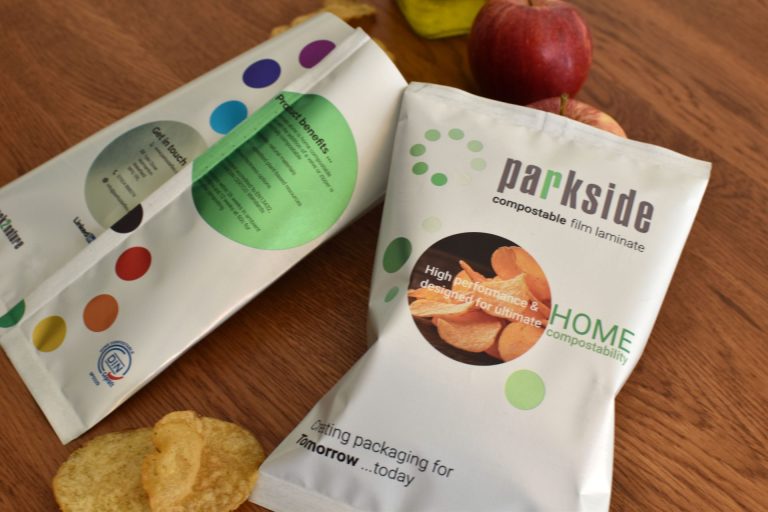
At Parkside, we develop barrier technologies to, for example, light, gases, oils, and oxygen, specifically to maintain product integrity across the full journey from packing line to consumer. The materials the barriers are built into are equally important. Sometimes that’s a high-performance plastic film, and sometimes it’s one of our paper-based Recoflex solutions, engineered with water-based barrier coatings to deliver comparable protection with recyclability built in. The point is that performance drives the decision, not a blanket preference for one material over another.
Format matters too
There’s another dimension to this that often gets overlooked: the environmental mathematics of the pack format itself. Flexible packaging, whether plastic or paper-based, uses fewer materials than rigid equivalents. It’s lighter, which means more units per truck, fewer journeys, and potentially much lower transport emissions as a result. It takes up less space in the supply chain and less space at end of life. When you weigh all of that against a rigid alternative, the flexible format often wins on overall environmental impact, even before recyclability enters the equation.
This is why the conversation needs to mature beyond material type. A lightweight, high-barrier flexible pack that keeps food fresh, travels efficiently, and supports recyclability at end of life, is doing its job properly. That is what good packaging looks like, irrespective of what it’s made from.
En route to the next “aha” moment
Consumer understanding often shifts slowly, and then all at once. When the evidence is clear enough, and the narrative catches up to it, the collective lightbulb does eventually come on.
The reframing of packaging sustainability, away from material prejudice and towards genuine performance, feels like it might be one of those moments. Not a defence of unnecessary or poorly designed packaging, and not of irresponsible packaging waste, but a more grown-up conversation about what packaging is actually for, and how to judge whether it’s doing its job effectively or not.
We don’t usually need less packaging. We need better packaging. And better starts with performance.
Is your packaging performing as well as it should be? Whether you’re reviewing your current pack formats or rethinking your sustainability strategy from the ground up, our team can help you find the right solution. Get in touch with Parkside today.